


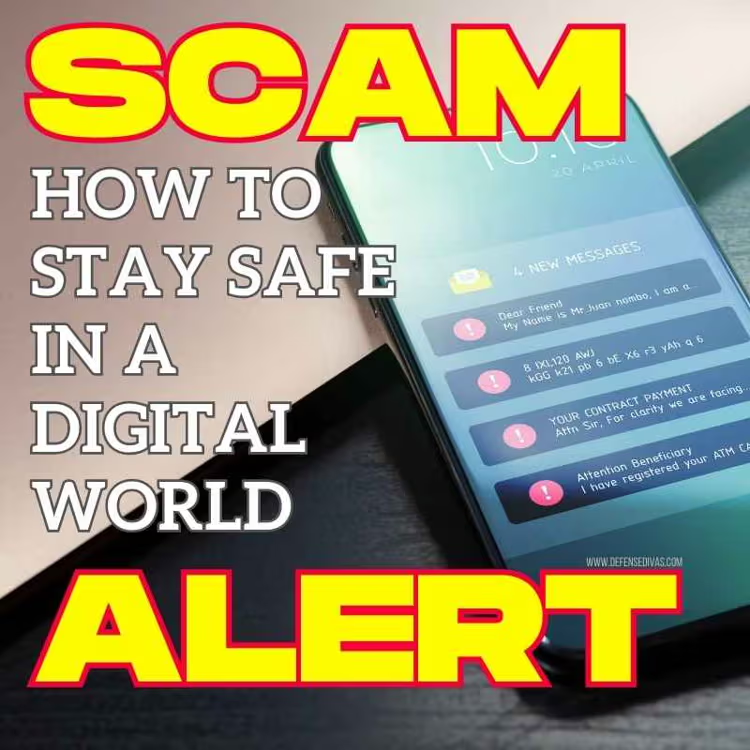
’Fake Calls & Online Scams: report and call 1930 ”
What Are Fake Apps?
Phishing applications are sometimes disguised as legitimate and trustworthy loan, bank, and shopping services. These fraudulent applications help scammers steal money from the consumer and their personal information. Scammers promote these applications by using WhatsApp links, fake online advertisements, or illegitimate downloads that offer quick loans or large returns. By the end of 2025, India had already experienced UPI fraud that added up to over Rs. 1,087 crore, while Google reported blocking 60 million potentially dangerous installs.
Fake loan applications such as CashFish or Flip Cash charge exorbitant interest rates and continually harass users for loan repayment. Trading applications will promise quick returns and profitable trades but will lock user accounts if the user attempts to withdraw funds. The Reserve Bank of India (RBI) has shut down many fraudulent loan applications and trading platforms, but new ones are constantly being created by scammers through Telegram channels and through third-party app stores.
Common Scam Calls
Scam calls begin with a pleasant tone but quickly transform into something malicious. One major example of this form of fraud is “call-merging.” A scammer impersonates a friend of yours, requests to merge your call with an IVR from a bank and, with this merger, can receive your OTP. Also, TRAI impersonators have called individuals and threatened to cut their SIM cards off stating that SIM customers need to pay for continuation of SIM service. TRAI will NEVER cut off a customer’s SIM service unless there is a fraudulent SIM with the customer’s name.
Another type of scam involves digital arrests whereby scammers call victims claiming police have their case and demand money so they do not get arrested. Another popular method is that scammers pretend to be the victim’s tax provider and claim they owe money and try to obtain banking information from the victim. Additionally, voice cloning is a type of AI that uses a deceased person’s voice to convince family members that they need help, resulting in more losses for families. There are projected to be over 715,000 fraudulent claims in 2025, with many being the result of phone calls.
Real-Life Traps
Think about it: You receive a “friend” who sends you a link to an app for loans via WhatsApp and asks for your camera and contact information, then sends the same message to all your friends to get money from them. Rs 29 Lakhs were stolen from a man from Hyderabad by fake profits created by a bogus trading app called EltAs Fud.
A businessman lost Rs 5.9 Crores by investing in an app called GSIN via a fake WhatsApp message from someone claiming to work for Goldman Sachs. In Ahmedabad, scams have taken place where gangs of people are threatening to collect money from anybody they contact by VoIP. As a result of the increased demand for fake products, the holidays have led to a large number of ads featuring celebrities that direct people to the bad APKs and have resulted in daily losses of thousands of rupees because of panic transferring.
Spot the Red Flags
Identifying Red Flags
When things seem to be too good to be true, they usually are! If you hear about a company that promises overnight investment returns of 50% or what seems like instant cash loans without any credit checks, you should be very cautious as these can be examples of how some scamming operations work.
When someone you do not know is contacting you and they tell you that you need to “act now or you will lose your account,” that should raise a red flag in your mind.
Be cautious about downloading apps with very few downloads and negative reviews because these apps were likely created by developers that are not trustworthy.
If you receive a phone call asking you for a one-time password (OTP), personal identification number (PIN), or bank account details, hang up! Legitimate banks will not ask for this information via the phone.
If you get a QR code and are told to scan it to “receive” money, this should raise your suspicions, as scanning this type of code will drain your account.
Lack of use of proper English when conversing with a representative of a financial institution about an investment or a request for money will usually identify that the person you are talking with is a scam artist.
The same is true if you are threatened into providing personal banking information. If you receive a financial institution’s request for money as a “refund,” it usually means the request was originally for a debit transaction.
How to Stay Safe
Only download applications from Google Play or the Apple App Store. Always verify the developer of the app, the review rating of the app, and how many downloads the app has received before downloading. Ensure you have Play Protect enabled on your device so it provides you with an extra level of security against malicious applications.
Do not click on any links you may receive in a WhatsApp message or SMS. You should always either type in the web address of the genuine web page used to sell goods or services yourself or check the genuine website directly by doing a simple internet search.
When you receive a phone call, do not merge your call with another call, never share your OTP and never download any software application that allows remote access to your device. Use caller ID applications such as CallApp or Truecaller to identify spam calls before answering.
If you want to avoid getting spam telephone calls, be sure to register your telephone number with the National Do Not Call Registry (NDCR).
When in doubt about any claims that you receive from someone you do not know, call your bank using the number that you found posted on their official website to verify the validity of the claim.
It is also important to put strong passcodes on your phone, use two-factor authentication on all your social media accounts and applications, and frequently update the software on your mobile device and applications.
In addition to protecting yourself from being a victim of a scam, it is also a good idea to monitor your bank statement weekly to identify any unauthorized transfers made to your account.
You shouldn’t limit your conversation with family members about scams to children and seniors, as all age groups can potentially become victims of a scam.
What If You Get Hit?
In just a few moments, you can be on your way to protecting yourself from the effects of cyber fraud through the actions outlined above; however, it is critical that you take action immediately. The following actions must be taken as soon as possible.
1) Call the helpline number 1930 immediately, as this number is available 24/7 for the reporting of cyber crime;
2) By 2024, we are expecting to freeze approximately ₹5000 crore because of the growth of cyber crime;
3) To obtain a complaint ID for cyber crime, go to cybercrime.gov.in;
4) If you report your case promptly to your Bank, the Bank will freeze your funds rapidly;
5) Immediately contact your Bank to stop all transactions using your cards and UPI;
6) Immediately change all of your passwords (including those for any banking and financial institutions) and
7) If you suspect that you have been a victim of a cybercrime, please contact your local police department for assistance by calling 112. If you are a woman who needs to make a report of a cyber crime, you can contact your police department for assistance by calling 181. 8) In association with the National Payment Corporation of India (NPCI) and the Reserve Bank of India (RBI), if your funds are frozen and you contact them within the 20-30 minute “Golden Hour” time period, only 20%-30% of your possible recovery is likely to occur in that same time period.
Why This Matters Now
According to a report released by the Reserve Bank of India (RBI), ₹1.2 lakh crore (approximately USD 17 billion) of cyber fraud is committed every year from Southeast Asian Cyber Criminals. Cyber fraud now accounts for 0.7% of India’s gross domestic product. Ultra-Payment (UPI) Transactional [T] increase continues to be viable targets due to increases in the number upline transactions, which, according to January 2025 statistics, were approximately 16.99 billion UPI transactional upline transactions. Cyber Fraud Tools and resources such as the Indian Government’s Cyber Fraud Control and Resource Monitoring System (CFCFRMS) can be beneficial if an individual possesses an adequate understanding of the current marketplace (as referenced in “Cyber Fraud Basics for Consumers”). Through the dissemination of this information to community members via peer-to-peer communication and social networking websites, cyber fraud will be reduced significantly; a single individual’s action of contacting their Bank can help to save countless numbers of individuals from victimization. Finally, as emphasised by RBI Guidelines, individuals cannot share their PINs with anyone, nor with any other individual. Cyber fraudsters are not smarter than all Cyber Fraud Victims. Remember, the most essential step in addressing the cyber crime will always be to be calm and verify prior to contacting your Bank or the police.
Immediate Steps
Initial Steps
• Hang up without divulging any information such as your OTP, PIN or bank information.
• Avoid calling back the number or clicking on any links provided by them.
• Breathe and record the information: the caller ID, date/time, the message they delivered, and any screenshots taken.
Secure Your Accounts
• Change your banking applications, email, and UPI passwords from a secure device as soon as possible.
• Make sure you have enabled/checked for two-factor authentication (2FA) on your accounts.
• Use your phone’s block function or utilize Truecaller to block the fraudulent caller’s number.
Report the Scam
• Immediately contact the national cyber helpdesk by dialling 1930 (this is free, available 24 hours a day, 7 days a week, and will provide guidance on what to do next).
• Complete the required report on cybercrime and you’ll receive your complaint ID to provide to your bank.
• Inform your bank or UPI provider (i.e. Google Pay, PhonePe) to freeze your bank account if there have been any dubious financial transactions.
Monitor and Prevent
• Examine your monthly bank statement and transaction alert for any suspicious purchases; report any unrecognized transaction immediately.
• Alert your family & friends regarding this scam by providing them with the caller ID if it’s safe to do so.
• Ensure that you are running the latest version of your phone’s operating system and installed applications for security vitals to be protected.


