


झारखंड आदिवासी नृत्य एवं संस्कृति.
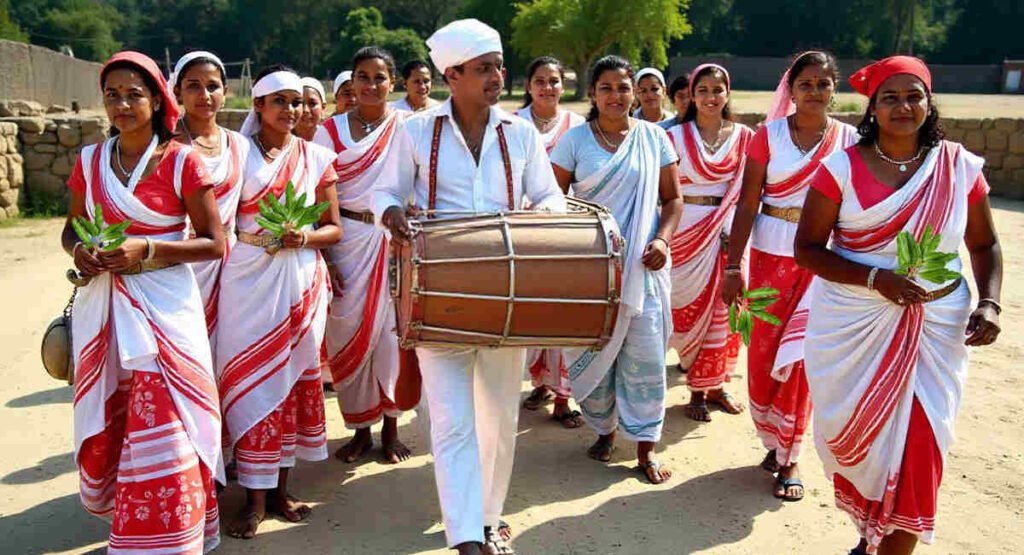
Jharkhand Tribal Dances: Living Traditions Rooted in Nature, Culture, and Community
Jharkhand, often called the “land of forests and hills,” is a place where culture dances to the rhythm of the drum.
The forest-dwelling communities, such as the Santhal, Munda, Oraon, Ho, Birhor, Asur, and Paharia, have, for centuries, continued to shape the state’s cultural identity through their dances and folk traditions.
Local dances are performed in accordance with local festivals and their associated beliefs. At a time when the level of purely cultural influence has declined significantly due to rapid development, and while tribal societies have also experienced rapid growth leading to significant changes in their lifestyles, the tribal ethos of community life, the tradition of living together, and the presence of local cuisine still serve as powerful reminders of their civilisation.
Dance as a Way of Life in Tribal Jharkhand
For the tribal communities residing in Jharkhand, dance is not merely a part of festivals, but an integral aspect of their daily lives. It finds expression through music and movement during births, harvests, weddings, worship, and even in times of mourning and death. While classical dance forms are not a part of their lives, the dances they perform are based on classical themes. Most tribal dances emphasise collective participation, symbolising their unity and equality. The traditional musical instruments used by the tribals, such as the mandar, dhol, nagara, tamak, and flute, remind the dancers of their shared identity. They reinforce the idea that they are all one, and that this connection to their villages and forests is what allows them to maintain their presence as a tribal community today.
Jhumar Dance: Celebration of Joy and Harvest
Jhumar is one of the most widely recognised tribal dances of Jharkhand. It is primarily performed during harvest seasons, fairs, and festivals. Jhumar embodies joy, romance, and the simplicity of rural life. In this dance, men and women dance in groups, forming circles or semi-circles. The movements are graceful, gentle, and rhythmic, accompanied by soulful folk songs that tell stories of love, nature, and the struggles of everyday life. The slow pace of Jhumar allows the dancers to express their emotions beautifully, making it one of the most popular folk dances of the region.
Chhau Dance: Martial Art Meets Mythology
The Chhau dance of Seraikela introduces Jharkhand to the cultural world. This dance combines masks, vigorous movements, and dramatic storytelling with elements of martial arts and regional traditions. In this dance, performers depict themes inspired by epics like the Ramayana and Mahabharata, as well as local stories. There is no spoken dialogue; the emphasis is primarily on body language and facial expressions. Recognised by UNESCO as an Intangible Cultural Heritage of Humanity, this dance has showcased Jharkhand’s artistic heritage not only throughout India but also to the world.
Santhali Dance: Rhythm of Community and Nature
Among the Santhal tribe, dance is an essential social activity. Santhali dances are performed during festivals such as Sohrai, Baha, and Karma, as well as during community gatherings and weddings.
In this dance, women typically form long lines or interconnected chains, while men play musical instruments behind them. This dance reflects the agricultural cycle, forest life, and reverence for nature. The coordination between the dancers and musicians highlights the Santhal belief in collective living and mutual respect.
Karma Dance: Worship Through Movement
Among the Santhal tribe, dance is an essential social activity. Santhali Dance is performed during festivals such as Sohrai, Baha, and Karma, as well as during marriages and community gatherings.
Women usually form long lines or interconnected chains, while men play musical instruments behind them. The dance reflects agricultural cycles, forest life, and reverence for nature. The harmony between dancers and musicians highlights the Santhal belief in collective living and mutual respect.
Domkach Dance: Celebration of Marriage and Humour
In Jharkhand, a wedding ceremony is considered incomplete without the Domkach dance. This dance is primarily performed by women, who, with their playful nature, tease the groom’s family through their gestures and songs during wedding celebrations. Social experience suggests that it is a celebration of new relationships. The Oraon tribe, Kurmi caste, Nagpuri-speaking communities, and other communities residing in Jharkhand use Domkach to tell stories and connect emotionally through dance and humour. Domkach is primarily performed during wedding ceremonies.
Paika Dance: Echoes of a Warrior Tradition
The Paika dance showcases Jharkhand’s martial past. Historically associated with tribal warriors, this dance is performed with weapons such as swords, shields, and spears.
Performed during major festivals and cultural events, the Paika dance symbolises courage, discipline, and readiness to defend the community. Its fast movements and energetic rhythm set it apart from other tribal dances, and it also reflects the region’s history of resistance.
Sarhul Dance: Honouring Nature and New Beginnings
Sarhul is one of the most prominent tribal festivals of Jharkhand, marking the arrival of spring. The Sarhul dance is performed to honour nature, especially the Sal tree, which has been given the status of the state tree.
Women, dressed in traditional attire and adorned with flowers, perform beautiful dances, while men accompany them with music. This dance expresses gratitude to nature for life, fertility, and sustenance, and reinforces the tribal philosophy of living in harmony with the environment.
Role of Traditional Instruments and Attire
Music is the soul of the tribal communities. The tribals of Jharkhand cannot live without dance. Whether it’s a small celebration or a grand festival, they dance rhythmically to the sounds of instruments like the Mandar and Nagara, which produce loud, resonant sounds.
The flute is an integral part of their lives, and clapping also enhances the rhythm. Traditional attire also plays a significant role among the tribals. Brightly colored sarees, dhotis, beaded jewellery, feathers, and naturally made ornaments are worn during performances, adding to their beauty and cultural identity.
Conclusion
The tribal dances of Jharkhand are not relics of the past; they are living traditions that are constantly evolving while remaining deeply rooted in the wisdom of their ancestors. They tell stories of forests and fields, joy and struggle, devotion and unity. In every beat of the drum and every synchronized step lies the spirit of a people who celebrate life through movement.
To preserve these dances is to preserve the soul of Jharkhand.


