


Denver Broncos: History, Legendary Eras, Culture and the Road Ahead
Explore the Denver Broncos’ history, the Orange Crush defence, the John Elway era, Super Bowl wins, Mile High culture and the modern journey in the NFL.
The Denver Broncos are one of the most recognised and historic professional football franchises in American sport. A member of the National Football League (NFL), the Broncos compete in the American Football Conference (AFC) West and have helped give Denver, Colorado—a city nestled near the Rocky Mountains—a distinctive place on the sporting map.
What began as a small and struggling club has grown into a franchise defined by three Super Bowl championships, legendary Hall of Fame players, and the unwavering support of “Broncos Country”.
1. The Franchise Begins and the Early Struggles (1960–1976)
Bob Howsam established the Denver Broncos as a charter member of the American Football League (AFL). The team played its first game on September 9, 1960, against the Boston Patriots and won what is widely recognised as the first game in AFL history.
The Broncos struggled for much of their first 13 years. They frequently finished near the bottom of the standings and operated with limited resources compared with more established teams.
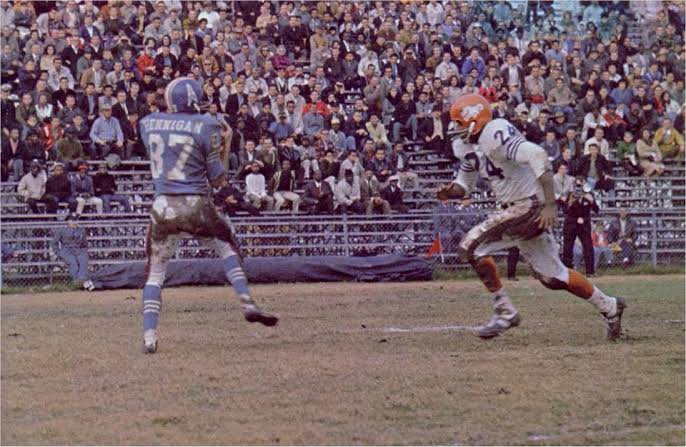
Their original uniforms, featuring mustard yellow and brown, were also widely mocked. Around 1965, however, the team changed its colours to a combination of blue and orange, a colour identity that would eventually become closely associated with the franchise.
The beginning of the 1970s finally brought a breakthrough. Under head coach John Ralston, Denver recorded a 7–5–2 record in 1973, producing the franchise’s first winning season.
2. The “Orange Crush” Defence and the First Super Bowl Appearance (1977)
The Broncos’ fortunes changed dramatically in 1977, when Red Miller became head coach. The defining feature of this era was Denver’s dominant defence, which became famous across the country as the “Orange Crush Defence.”
Led by linebackers such as Randy Gradishar, Tom Jackson and Louis Wright, the defence became one of the defining units of its era.
During the 1977 season, Denver posted an impressive 12–2 record and defeated the Pittsburgh Steelers and Oakland Raiders in the playoffs to reach the franchise’s first Super Bowl.
The Broncos eventually lost to the Dallas Cowboys in Super Bowl XII, but their breakthrough season sparked enormous excitement throughout Denver and laid the foundation for what would become known as “Orange Mania.
3. The John Elway Era: From Heartbreak to Back-to-Back Championships (1983–1998)
In 1983, an event during the NFL Draft changed the history of the Broncos forever. Stanford star quarterback John Elway did not want to play for the Baltimore Colts, and Denver acquired him through a major trade.
Elway would eventually become the defining figure of the franchise.
“The Drive”
Elway became famous for his ability to produce dramatic comebacks in crucial moments.
During the 1986 AFC Championship Game against the Cleveland Browns, Elway led a legendary 98-yard scoring drive. The sequence became known simply as “The Drive” and remains one of the most celebrated moments in American football history.
Super Bowl Disappointments—and Then Two Championships
During the 1980s, Elway led Denver to three Super Bowl appearances—Super Bowls XXI, XXII and XXIV. The Broncos lost all three, often by significant margins.
For a time, it appeared possible that Elway might finish his career without a championship.
That changed in the mid-1990s, when Mike Shanahan became head coach and running back Terrell Davis emerged as a major offensive star.
Super Bowl XXXII
In Super Bowl XXXII, following the 1997 season, the Broncos faced the Green Bay Packers as underdogs.
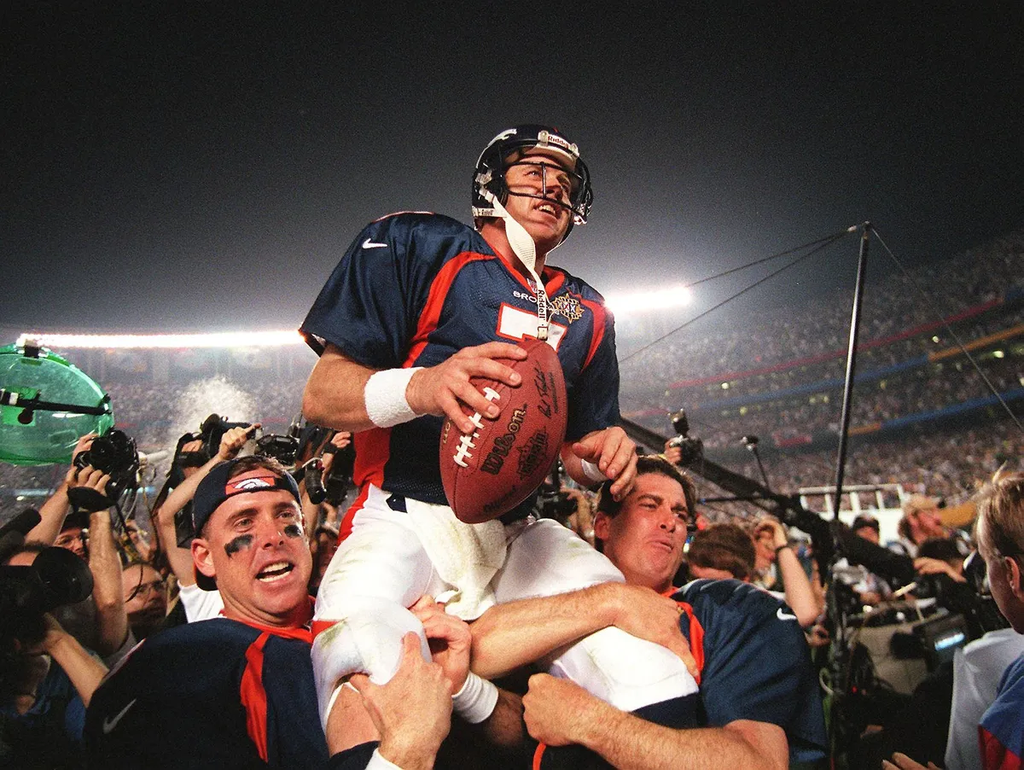
The 37-year-old Elway produced one of the most memorable plays of his career with his famous “Helicopter” dive, twisting through the air while fighting for a first down.
Denver defeated Green Bay 31–24, winning the first Super Bowl championship in franchise history.
When then-owner Pat Bowlen lifted the Lombardi Trophy, he famously dedicated the victory to Elway with the words:
“This one’s for John!”
Super Bowl XXXIII
The following season, Denver returned to the Super Bowl.
The Broncos defeated the Atlanta Falcons 34–19 in Super Bowl XXXIII, securing back-to-back championships.
Elway was named Super Bowl MVP and retired from professional football following the victory.
4. The Peyton Manning Era and the “No Fly Zone” (2012–2015)
Following Elway’s retirement, the Broncos continued to reach the playoffs during the 2000s but struggled to return to the Super Bowl.
The 2011 season brought the unexpected phenomenon known as “Tebowmania” surrounding quarterback Tim Tebow.
In 2012, Broncos executive vice president John Elway and the organisation made one of the biggest moves in franchise history by signing free-agent quarterback Peyton Manning.
| Year/Season | Major Achievement | Key Highlight |
|---|---|---|
| 2013 | NFL scoring records | 55 touchdowns and 5,477 passing yards |
| 2013 | Super Bowl XLVIII runner-up | Lost to the Seattle Seahawks |
| 2015 | Super Bowl 50 champion | Historic “No Fly Zone” defence |
In 2013, Manning led one of the most prolific offences in NFL history. The Broncos produced a remarkable regular season, although they suffered a heavy defeat to the Seattle Seahawks in Super Bowl XLVIII.
Following that loss, the team’s focus shifted to building an elite defence.
The “No Fly Zone” and Super Bowl 50
In 2015, Denver assembled a dominant defensive unit featuring players such as Von Miller, DeMarcus Ware, Chris Harris Jr. and Aqib Talib.
The secondary became known as the “No Fly Zone.”
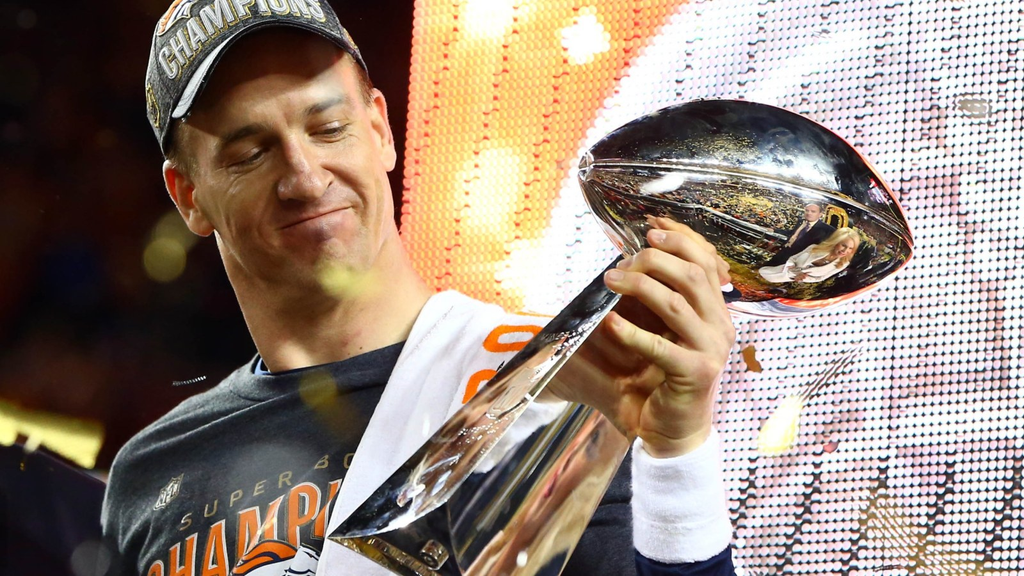
In Super Bowl 50, Denver faced the Carolina Panthers and quarterback Cam Newton. The Broncos’ defense controlled the game and repeatedly disrupted Carolina’s offence.
Von Miller was particularly dominant, recording 2.5 sacks and two forced fumbles.
Denver won 24–10, giving the franchise its third Super Bowl championship.
John Elway, then serving as the team’s general manager and executive, remembered the late Pat Bowlen during the celebration, saying:
“This one’s for Pat!”
The game also proved to be the final NFL game of Peyton Manning’s career.
5. Mile High Culture and the Broncos’ Unique Home-Field Identity
One of the most distinctive aspects of the Denver Broncos is their home-field environment at Empower Field at Mile High.
The “Mile High” Advantage
Denver sits approximately 5,280 feet above sea level, giving the city its famous “Mile High” nickname.
The thinner air at this elevation creates an additional physical challenge for visiting teams, especially for players who are not accustomed to the altitude. Broncos players regularly train and compete in these conditions, making the stadium’s environment an important part of the team’s identity.
The “Incomplete” Chant
One of the best-known traditions at Broncos home games comes after an opposing quarterback throws an incomplete pass.
Fans loudly chant:
“IN-COM-PLETE!”
The coordinated stadium response has become one of the most recognisable traditions at Broncos home games.
Miles and Thunder
The Broncos’ official costumed mascot is Miles.
The team is also famous for Thunder, a real white Arabian horse that appears on the field during Broncos games. Following a Denver touchdown, Thunder traditionally runs across the field, creating one of the most recognisable visual traditions in Broncos football.

6. A Change in Ownership and the Modern Era (2022 Onwards)
Following the death of long-time owner Pat Bowlen, the Broncos remained under trust ownership for several years.
During this period, inconsistency at the quarterback position contributed to several seasons in which Denver failed to remain in serious playoff contention.
In August 2022, the franchise was purchased by the Walton-Penner Family Ownership Group for $4.65 billion, at the time a record-setting price for a professional sports team.
The ownership group also includes notable individuals such as Formula 1 champion Sir Lewis Hamilton and former U.S. Secretary of State Condoleezza Rice as minority partners.
In 2023, the Broncos hired Super Bowl-winning coach Sean Payton as head coach. Under Payton, the organisation began to rebuild and restructure the team.
In the 2024 NFL Draft, Denver selected Oregon quarterback Bo Nix in the first round, placing an important part of the franchise’s future in the hands of a young quarterback.
The Broncos entered a new phase built around youth, discipline, coaching and long-term development, with the goal of competing more strongly in the highly competitive AFC West.
7. Major Achievements and Hall of Fame Legends
The Denver Broncos have established themselves as one of the NFL’s most successful franchises.
Super Bowl Championships
The Broncos have won three Super Bowls:
- Super Bowl XXXII — 1997 season
- Super Bowl XXXIII — 1998 season
- Super Bowl 50 — 2015 season
AFC Championships
Denver has won eight AFC championships, in:
- 1977
- 1986
- 1987
- 1989
- 1997
- 1998
- 2013
- 2015
Major Broncos Hall of Fame Figures
Several legendary figures have played major roles in the franchise’s history.
- John Elway (QB): The iconic face of the franchise and a two-time Super Bowl champion.
- Terrell Davis (RB): A member of the 2,000-yard rushing club and Super Bowl MVP.
- Shannon Sharpe (TE): One of the most influential tight ends in NFL history.
- Champ Bailey (CB): Widely regarded as one of the greatest cornerbacks of his generation.
- Steve Atwater (Safety): Famous for his physical style of play and hard-hitting tackles.
- Pat Bowlen (Owner): The visionary owner who helped establish a winning culture in Denver.
A Legacy That Continues to Endure
The Denver Broncos are more than just a professional football franchise. They have become an important part of the sporting and cultural identity of the American Mountain West.
From the legendary Orange Crush defence of the 1970s to John Elway’s iconic helicopter play in the 1990s to Von Miller’s dominant performance in Super Bowl 50, the Broncos’ history has been shaped by resilience, teamwork and an ability to overcome adversity.
Today, a new generation of players, coaches and leaders is carrying that tradition forward. With new ownership, experienced coaching and young talent, Broncos Country continues to look toward the future with the ambition of bringing another Lombardi Trophy back to the Mile High City.
Fact-Check Notes Before Publication
Before publishing, verify a few details in the original article against official NFL/Denver Broncos records, particularly:
- The exact wording and historical context surrounding the first AFL game involving Denver.
- The precise timing of the Broncos’ uniform/colour change around 1965 should be verified.
- The description of the “Incomplete” stadium tradition, including the exact number of fans and announcer wording.
- The claim that Denver’s altitude gives the Broncos a natural fourth-quarter advantage should be presented carefully, since the physiological effect is more nuanced than a guaranteed competitive advantage.
- The ownership-sale figure and “largest professional sports team sale at the time” wording should be checked against contemporary records.
- The phrase “current” should be updated before publication if this article is intended to describe the Broncos’ 2026 roster or competitive position.
Table of Contents
- The Franchise Begins and the Early Struggles (1960–1976)
- The “Orange Crush” Defence and the First Super Bowl Appearance (1977)
- The John Elway Era: From Heartbreak to Back-to-Back Championships
- “The Drive”
- Super Bowl Disappointments—and Then Two Championships
- Super Bowl XXXII
- Super Bowl XXXIII
- The Peyton Manning Era and the “No Fly Zone” (2012–2015)
- The “No Fly Zone” and Super Bowl 50
- Mile High Culture and the Broncos’ Unique Home-Field Identity
- The “Mile High” Advantage
- The “Incomplete” Chant
- Miles and Thunder
- A Change in Ownership and the Modern Era (2022 Onward)
- Major Achievements and Hall of Fame Legends
- Super Bowl Championships
- AFC Championships
- Major Broncos Hall of Fame Figures
- A Legacy That Continues to Endure
- Fact-Check Notes Before Publication


