


The SIR-2025, initiated by the Election Commission of India (ECI), also introduces an updated electoral roll in 12 States / UTs with a coverage area of 51 crores and its final publication on February 7, 2026. Implemented in Phase-II; and process started by 04/12/2025; ensuring digitalization of Forms 6,7 & 8 for filing new registrations, objections and correction which gives priority to online submission and BLO verification. It is a sequel to the successful Phase-I of Bihar, with additional documentation and forms encoded with QR for accuracy.
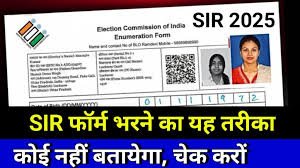
SIR scrutinizes error-free electoral rolls by incorporating all eligible 18 years and above voters as on January 1, 2026 and excludes duplicate entries, dead or migratory voters under Article 326 & Section — of the Representation of the People Act.,1950. Phase-II includes Andaman & Nicobar Islands, Chhattisgarh, Goa, Gujarat, Kerala, Lakshadweep, Madhya Pradesh, Puducherry, Rajasthan,Tamil Nadu, Uttar Pradesh and West Bengal due to high level of digitization readiness besides availability of trained BLOs. Exemptions such as Maharashtra track SC deadlines for local polls and use a 70-80% traceable link base of past rolls (2002-2004) ideals.
The campaign is being driven by house-to-house verification of details by BLOs, with online portals open at voters. eci. gov.in simplifying access—no downloads needed. Date synchronization of the qualifying date prevents post-cutoff inclusions with aims at “no eligible left out, no ineligible included.” Bihar’s former SIR removed 65-68 lakh records, establishing the golden standard with a coverage of 99.8%.
Step-by-Step SIR Enumeration Form Process
Access the Voters’ Service Portal (voters.eci.gov.in) or ECINET app, click “Services,” then “Fill Enumeration Form.” Enter state, EPIC number (mandatory linkage with mobile), and verify via OTP; select if your name or parents’ appeared in prior rolls, adding relative details for traceability. Preview, complete Aadhaar optional linkage (identity proof only), attest accuracy, and submit digitally or print for BLO handover by December 4.
BLOs collect offline forms door-to-door, scan QR codes, and upload with signatures/thumb impressions. Status to be tracked through “Track Enumeration Form” by using a reference ID; acknowledgement receipts confirm the receipt. In case of errors, single line cross-outs, not overwrites, are allowed. Further, family signatories for migrants are indicated with relation. This hybrid model increases inclusion for 51 crore voters.
Form 6: New Voter Registration
Form 6: Registration of fresh 18+ citizen or migrant, to be submitted along with SIR enumeration declaration. Online: Search EPIC, select Form 6 under claims, fill name, DOB, address, parent’s details, and upload proofs like Aadhaar or birth certificate. Offline: BLO provides form; attach 13 approved documents-which have been increased from 11-sign and submit for ERO scrutiny within 7 days.
Verification includes the BLO house-checks; approved names go into draft rolls for objections. This will be prioritized for the youth and women in the 12 states of the country, targeting 1 crore new additions. Rejections would be on account of ineligibility, while appeals are made to appellate authorities. Digital tracking provides transparency.
Form 7: Objections and Deletions
Form 7 files objections relating to draft roll entries-ineligibilities such as duplicates, deceased, or shifted voters. Access via portal “File Claim/Objection,” select Form 7, enter EPIC of the targeted elector, state reasons (attach death certificate of the deceased), and submit. BLOs/EROs inform the affected parties and conduct hearings before deletion on proof.
Key in SIR: Target inaccuracies from Bihar-like deletions (68 lakh). Draft rolls to be publicly displayed from January 6, 2026, inviting Form 7 till January 20. Penalties will apply for frivolous claims under RP Act. These cleanse rolls for 90,712 booths capped at 1,200 voters.
Form 8: Amendments to Existing Entries
Form 8 is for updating the name, address, photo, DOB, or gender of existing voters. Portal Path: “Ser-vices” > Form 8, input EPIC, specify changes, upload proofs (matriculation for DOB, passport for address). BLO verifies on-site, and the ERO approves after including in drafts.
SIR mandates linking for online; unlinked get notices. 13 documents suffice: add pension or-ders, family registers. Process completes pre-final roll; appeals resolve disputes. Enhances ac-curacy for migrants in UP, Rajasthan.
Required Documents and Rules
ECI enumerates 13 documents: Aadhaar-identity only, birth/matriculation certificates, passports, PRCs, forest/caste certificate, govt./bank IDs, pensions, family registers. To be submitted at the time of enumeration or on notice; no upfront documents for linked voters. Rules: Full signatures, QR scans, BLO attestation; penalty for false claims under Section 32, RP Act 1950.
Digitization traces all; PwD/elderly get BLO aid. Bihar added EPIC-searchable deletions, the nation mandated mobile linkage.
BLO Role and State-Specific Notes
BLOs distribute forms, verify, digitize, and issue acknowledgements, coordinating with EROs/BDOs. They handle Forms 6-8, delete errors, and train on QR tools. UP/WB: Focus high-mapped areas; Kerala preps post-poll clarity.
Chhattisgarh/Goa focus on tribal inclusions through forest documents. Follow through the NVSP app.
New Features vs. Bihar SIR
Bihar’s 2023-25 SIR digitised 7.23 crore forms, SC-mandated EPIC reasons. 2025 adds 2 docs, uniform deadline, no-download online, parental linkage fields. Enhanced BLO penalties, 12-state scale vs. Bihar solo.
This evolves to fraud-proof rolls by 2026.



Ati sundar