


Gilgit offers exactly this experience. From dramatic mountain scenery and historic sites to adventure tourism and traditional communities, the region provides a fascinating combination of nature, history and culture.
Gilgit: A Fascinating Destination Surrounded by the Karakoram
Gilgit is one of the most remarkable mountain destinations in northern Pakistan. It serves as an important urban centre and gateway to the wider Gilgit-Baltistan region. Surrounded by some of the world’s highest mountain ranges, Gilgit is particularly attractive to travellers interested in nature, adventure, history and traditional mountain cultures.
The wider Gilgit-Baltistan region covers about 72,000 square kilometres and is divided into ten districts, according to the region’s Tourism Department.
Its geographical position gives it enormous importance. The region lies close to the borders of China, Afghanistan and the Indian-administered areas of Jammu and Kashmir. This location has historically made Gilgit an important crossroads between South Asia and Central Asia.
Today, however, many visitors know Gilgit primarily for its extraordinary landscapes.
Why Is Gilgit So Special?
Gilgit’s biggest attraction is its geography.
The city is surrounded by dramatic mountain landscapes, while the wider region contains enormous peaks, glaciers, valleys, rivers and high-altitude plateaus. The Tourism Department describes Gilgit-Baltistan as a region containing hundreds of peaks above 6,000 metres, including numerous peaks above 7,000 metres.
The Karakoram, Himalaya and Hindu Kush mountain systems contribute to the region’s distinctive landscape.
Among the most famous mountains associated with the wider region is K2, the world’s second-highest mountain after Mount Everest. Other celebrated peaks include Nanga Parbat, Rakaposhi, Broad Peak and the Gasherbrums.
This combination of enormous mountains and green valleys makes the area particularly attractive to photographers, trekkers and adventure travellers.
Top Places to Explore Around Gilgit
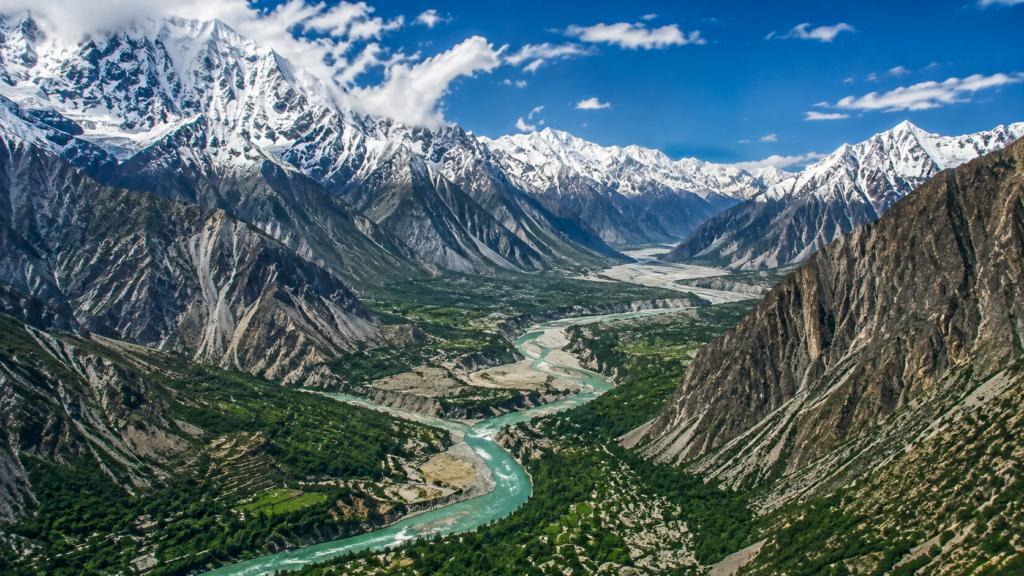
1. Gilgit City
Gilgit itself is an excellent starting point for exploring the surrounding region.
The city provides access to mountain valleys, historical attractions and important roads connecting different parts of Gilgit-Baltistan. Travellers can experience local markets, traditional food and the culture of mountain communities.
The city also acts as a convenient base for journeys towards Hunza, Naltar and other destinations.
2. Kargah Buddha
One of the most interesting historical attractions near Gilgit is Kargah Buddha, a rock carving locally known as Yshani.
It provides evidence of the region’s ancient cultural and religious history. The Tourism Department identifies Kargah Buddha as an archaeological site and highlights it among the attractions of Gilgit-Baltistan.
For visitors interested in archaeology and history, the site offers a fascinating contrast to the region’s spectacular natural scenery.
3. Naltar Valley
Naltar Valley is another popular destination accessible from Gilgit.
The valley is famous for its mountain environment, forests, lakes and scenic landscapes. It is particularly appealing to travellers who want to experience a quieter natural environment away from busy urban areas.
The official tourism portal lists Naltar Valley and Naltar Lakes among the major attractions of Gilgit-Baltistan.
4. Hunza Valley
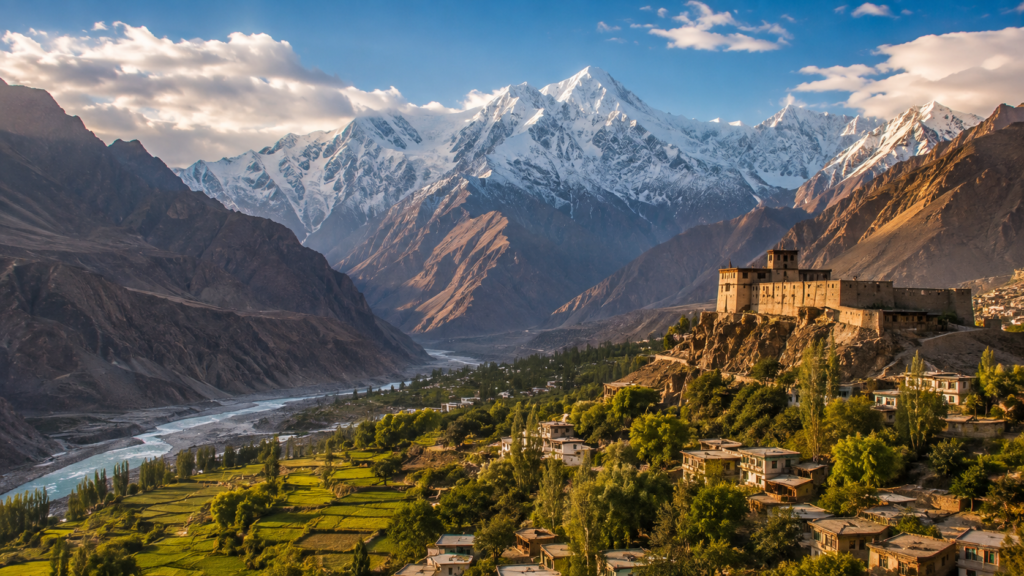
Hunza is perhaps one of the best-known destinations associated with Gilgit-Baltistan.
Its dramatic mountain scenery, villages, historic forts and terraced landscapes have made it internationally popular.
Visitors can explore places such as Baltit Fort, Altit Fort and Attabad Lake, all of which are highlighted by the regional tourism department.
Hunza is especially attractive during seasons when the surrounding mountains and valleys display contrasting colours.
5. Fairy Meadows
Fairy Meadows is another famous natural attraction in the region.
Located in the Diamer area, it is renowned for its spectacular views of Nanga Parbat, one of the world’s highest mountains. The combination of green meadows and enormous mountain walls creates an unforgettable landscape.
The official tourism website lists Fairy Meadows among the major attractions of Gilgit-Baltistan.
6. Deosai National Park
For travellers interested in high-altitude landscapes and wildlife, Deosai National Park is a remarkable destination.
The Tourism Department describes Deosai as a high-altitude alpine plain with an average elevation of around 4,114 metres above sea level.
Its broad open landscapes look very different from the narrow valleys and towering mountains found elsewhere in the region.
Gilgit and the Karakoram Highway
One of the most important routes associated with Gilgit-Baltistan is the Karakoram Highway.
The highway connects Pakistan with China through the mountainous Karakoram region. Historically, the area was connected with ancient trade networks associated with the Silk Road. The modern highway transformed transportation and connectivity across the mountains.
For travellers, the road journey itself can become part of the adventure. Mountain walls, rivers, glaciers and valleys appear along the route, creating countless opportunities for photography.
The development of the Karakoram Highway also increased the strategic and economic importance of the region. The Tourism Department notes the historical importance of the area’s links with China and Central Asia.
Culture and Traditional Life
Gilgit is not only about mountains.
The region has a rich cultural landscape consisting of different communities, languages, traditions, music, food and festivals. Traditional mountain life remains an important part of the identity of Gilgit-Baltistan.
Visitors may encounter traditional houses, locally produced handicrafts, regional dishes and community celebrations.
Polo is also an important cultural and sporting tradition. The famous Shandur Polo Festival attracts attention because of its high-altitude setting and traditional sporting culture.
In June 2026, Gilgit-Baltistan won the Shandur Polo Festival final against Chitral, ending a 12-year title drought.
Such events demonstrate how sport and culture are closely connected in the region.
Tourism and the Local Economy
Tourism has become increasingly important to Gilgit-Baltistan.
Hotels, restaurants, guides, transport operators, handicraft sellers and local businesses all benefit from visitors.
The regional tourism department reported that its tourism sector generated Rs. 399.5 million in revenue during fiscal year 2024–25, exceeding its target of Rs. 275 million. The department attributed the growth partly to tourism promotion, improved facilities, guide training and efforts to improve safety and infrastructure.
This growth also highlights the importance of responsible tourism.
Beautiful mountain environments can be fragile. Increasing numbers of tourists create challenges involving waste management, road safety, water resources and conservation.
Sustainable tourism can help ensure that the economic benefits of tourism reach local communities while protecting the environment.
Best Time to Visit Gilgit
The best time to explore Gilgit depends on what you want to experience.
Spring and summer are generally attractive for sightseeing, valley exploration and mountain journeys. The landscape becomes greener, and many higher-altitude routes become more accessible.
Autumn is particularly attractive for photographers because many valleys develop beautiful seasonal colours.
Winter brings snow and dramatically different scenery, although cold temperatures and road conditions can affect travel plans.
Travellers should always check current weather and road conditions before starting a journey. This is especially important in mountainous areas where landslides, flash floods and other weather-related hazards can affect transportation. The Gilgit-Baltistan Tourism Department issued travel advisories in 2026 urging visitors to check weather and road conditions before travelling.
Responsible Tourism in Gilgit
A trip to Gilgit should not only be about taking photographs.
Responsible travellers should respect local communities, avoid littering, reduce plastic waste and follow local regulations. Mountain environments can take a long time to recover from environmental damage.
Visitors should also respect local traditions and cultural sites.
Supporting locally owned hotels, restaurants, guides and handicraft businesses can help tourism contribute directly to communities.
The Tourism Department itself promotes sustainable tourism aimed at conserving natural and cultural heritage while supporting local livelihoods.
What Makes Gilgit Worth Visiting?
Gilgit combines several experiences in one destination.
You can see enormous mountains, explore ancient archaeological sites, travel through dramatic valleys, experience traditional cultures and discover some of the world’s most spectacular high-altitude landscapes.
For adventure lovers, it can be a gateway to trekking and mountaineering.
For photographers, it offers extraordinary scenery.
For history enthusiasts, it provides connections to ancient trade routes and archaeological heritage.
For ordinary travellers, it offers an opportunity to experience a completely different mountain environment.
That combination is what makes Gilgit so fascinating.
Final Thoughts
Gilgit is much more than a mountain city. It is a gateway to one of the world’s most extraordinary high-altitude regions.
From Naltar Valley and Kargah Buddha to Hunza, Fairy Meadows, Deosai and the great peaks of the Karakoram, the surrounding landscape offers an enormous variety of experiences.
At the same time, Gilgit-Baltistan’s cultural traditions, historic routes and growing tourism industry add depth to its natural beauty.
For anyone searching for a destination that combines mountains, adventure, history, culture and breathtaking scenery, Gilgit deserves a place on the travel map.
As tourism continues to develop, the real challenge will be balancing accessibility with conservation. If that balance is maintained, Gilgit can continue to attract travellers while preserving the remarkable landscapes and cultural heritage that m


